Journal · Geometry, Technology & Science
From Algorithm to Brushstroke: One Mind at the Canvas
How does a mind trained on systems meet the canvas? For Ritu Raj, abstraction is a living inquiry, where algorithm and brushstroke ask the same question.
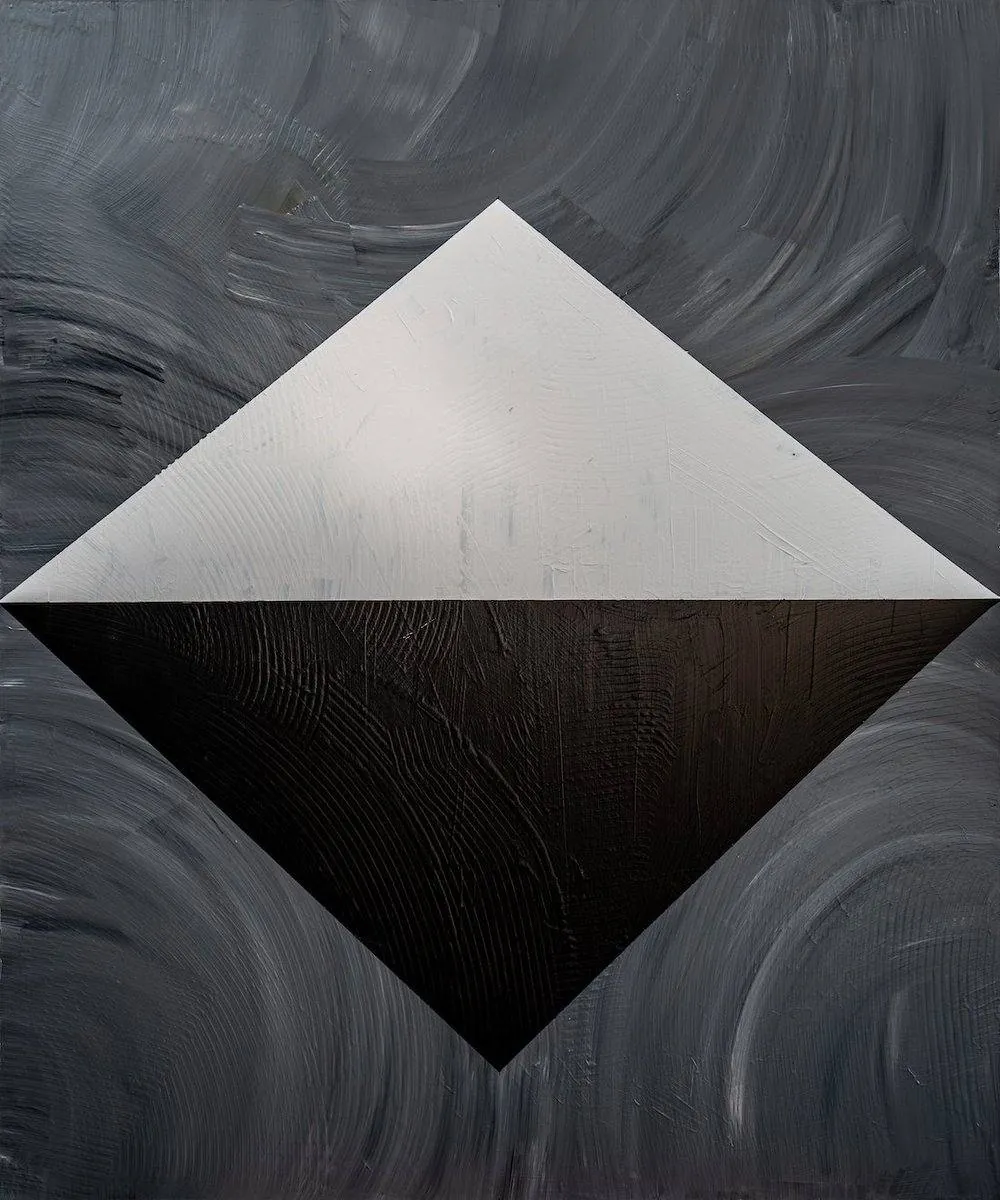
For most, the worlds of mathematics, cloud computing, and fine art seem like separate universes — one driven by precision, the other by intuition. But for me, these realms have never been in conflict. They are different expressions of the same fundamental urge: to explore, to question, to create.
Mathematics, linguistics, building companies, cloud technology: these are not a past I leave at the studio door. They are part of how I see. Many assume this means I approach the canvas with rigid structure or systems, but in truth, what these disciplines give me is something subtler — a comfort with complexity, a fascination with patterns, and a profound respect for process.
When I paint, I am not following an algorithm, but I am sensitive to the same forces that guide computational thinking: emergence, iteration, the dance between control and unpredictability. Just as a system evolves with each new input, so too does a painting evolve with each gesture, each layer of color, each interruption or surprise.
I am drawn to the tension between structure and spontaneity, geometry and improvisation, precision and emotion. This is where everything I know becomes a tool, not a trap — not imposing a rigid framework, but offering a lens through which to embrace experimentation. Whether I’m carving into wood with CNC machines or letting ink flow freely across a surface, I carry the mindset of a lifelong learner, a boundary-crosser, an explorer.
Abstraction, for me, is the perfect space for this convergence. It allows me to play at the edge of what’s known and unknown, blending scientific rigor with artistic vulnerability. In this space, each brushstroke is not just a mark — it’s an inquiry, an equation, a question waiting to unfold.
So when you stand before one of my pieces, know that you are seeing the result of a layered, interdisciplinary conversation — one where algorithm and brushstroke meet, where the language of technology and the language of feeling come together, creating a space that invites you to explore your own edges, your own questions, your own surprises.
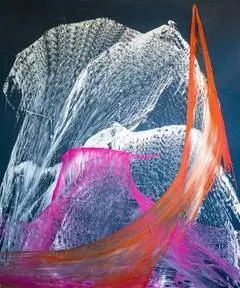
Paintings in this essay
Keep reading
 Geometry, Technology & ScienceWhy I Paint by Hand in an Over-AI’d World3 Jul 2025
 Geometry, Technology & ScienceFamous Geometric Abstract Art: Iconic Works and Modern Inspirations6 Jun 2025
 Geometry, Technology & Science7 Groundbreaking Art Techniques for 2025: AI, Bio, and Organic Innovations1 Aug 2025